Thailand
The tropics all year round and a currency that has stood still for eleven years
A warm sea in January, fruit from the market, an island where the beach is five minutes away by scooter. Thailand is bought first of all for living: to spend the winter and to come back.
Four very different places: big Bangkok, beachside Pattaya, the island of Phuket and quiet Samui. You can choose by character, not only by budget.
A foreigner buys a flat in full ownership in their own name. The baht has stood still against the dollar for eleven years: 32.7 then and 32.6 now.
The buyer of a ready flat usually pays about 1% on top, and the first 150,000 baht of rent a year is not taxed. You are free to let for a month or longer.
A purchase from 3m baht gives the right to a yearly renewable visa. It is a calm market without currency swings: a home here is about a way of life, not a quick profit.


What people come here for

Climate and nature
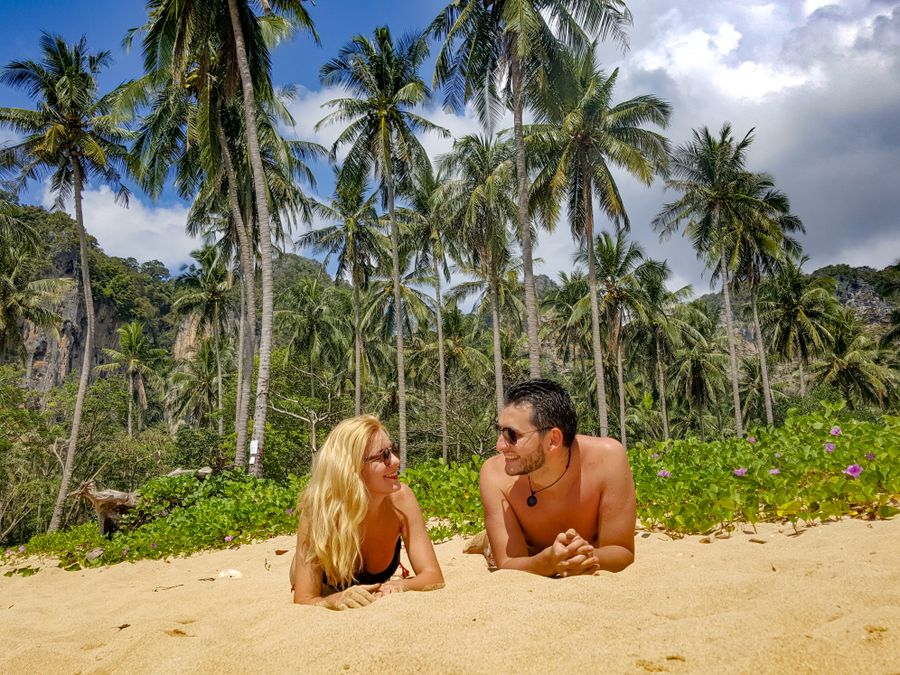
The country is famous for its nature: tropical forests and national parks such as Khao Yai and Kaeng Krachan, and the limestone cliffs of Phang Nga Bay near Phuket. The climate is tropical: the rainy season runs from May to September, a cool dry season from November to mid-March, and the south is hot and humid all year.
- Climate: tropical: rainy season from mid-May to September, cool dry season from November to mid-March, the south hot and humid all year
- Coastline: 3,219 km
- Languages: Thai (official); also Malay and Burmese; English is common among the elite
- Currency: baht
- Time zone: UTC+7
History, culture and what to see
Thailand is known as a country that was never a European colony, with the ancient history of the kingdoms of Sukhothai and Ayutthaya. The ruins of their temples are on the UNESCO World Heritage List. There are many Buddhist temples, among them Wat Phra Kaew in Bangkok, which holds the Emerald Buddha, and the city of Chiang Mai in the north, with the heritage of the Lan Na kingdom. The country is famous for its nature: tropical forests and national parks such as Khao Yai and Kaeng Krachan, and the limestone cliffs of Phang Nga Bay near Phuket. The climate is tropical: the rainy season runs from May to September, a cool dry season from November to mid-March, and the south is hot and humid all year. Industry, agriculture and tourism are among the main sectors of the economy.
What to see and how far it is from our places
- Historic City of Ayutthaya (UNESCO). The capital of the Ayutthaya kingdom from about 1350 to 1767: a city of temples whose ruins stand in a historical park north of Bangkok. UNESCO inscribed the site on the World Heritage List in 1991. Bangkok — 67 km, Pattaya — 161 km.
- Khao Yai National Park (UNESCO). A forested mountain national park northeast of Bangkok, part of the "Dong Phayayen–Khao Yai" complex. UNESCO inscribed the complex on the World Heritage List on 14 July 2005. Bangkok — 122 km, Pattaya — 168 km.
- Kaeng Krachan National Park (UNESCO). A national park in western Thailand, part of the "Kaeng Krachan" complex. UNESCO inscribed the complex on the list on 26 July 2021, and it is the most recent of the country's natural sites on the list. Bangkok — 155 km, Pattaya — 156 km, Samui — 372 km.
- Thungyai–Huai Kha Khaeng (UNESCO). Two neighbouring reserves in western Thailand, protected forest areas. It is one of three natural sites of the country on the UNESCO list, inscribed in 1991. Bangkok — 244 km, Pattaya — 341 km.
- Historic Town of Sukhothai (UNESCO). The ruins of Sukhothai, the capital of the first Thai kingdom, spread across a historical park among temples, stupas and statues of the Buddha. The kingdom was founded in 1238, and in 1991 the site was inscribed on the UNESCO World Heritage List. Bangkok — 373 km.
- Ban Chiang (UNESCO). An archaeological site in northeast Thailand, the place of one of the early copper and bronze productions in the region. UNESCO inscribed the site on the World Heritage List in 1992.
- Bangkok. The capital and largest city of Thailand, on the Chao Phraya river. The city is known for its many temples, markets and canals, and for the Grand Palace. Bangkok — within the city, Pattaya — 100 km.
- Wat Phra Kaew. The Temple of the Emerald Buddha on the grounds of the Grand Palace in Bangkok, regarded as the most sacred Buddhist temple in Thailand. Construction began in 1783 under King Rama I. Bangkok — within the city, Pattaya — 100 km.
- Phang Nga Bay. A bay in the south of Thailand not far from Phuket, known for its steep limestone cliffs and islands. James Bond Island, Ko Tapu, appeared in the film "The Man with the Golden Gun". Phuket — 49 km, Samui — 205 km.
- Chiang Mai. The largest city of northern Thailand and the historic capital of the Lan Na kingdom. The urban area has about 1.2 million residents according to 2023 data, making it the second city of the country by urban population.
See what it looks like
Phuket from above · 8 min · channel Exploropia

Now to business
Strengths first, then the essentials of the market. As of 10 October 2026.
What is good about this place
- Freedom of testation. There are no compulsory shares: the owner disposes of the property at their own discretion.
- Inheritance tax applies only to very large estates: it is taken only on the part above 100 million baht (about $3m) for each heir, at 5% for children and parents.
- International schools. There are schools with American and British programmes and the IB, and with the national programmes of other countries (the ISAT association).
The market in brief
- A purchase gives neither citizenship nor permanent residence.
- The tax on sale and the mortgage terms for a foreigner could not be confirmed from official pages; see the last section.
Worth keeping in mind
- A foreigner can own only a condominium apartment, and only while the building's quota is not used up: foreigners may own no more than 49% of the floor area. A foreigner cannot buy land; for houses and villas the route is a long-term land lease, usually for 30 years.
- Short-term letting is prohibited: lets must be for 30 days or more. The "buy and let to tourists" model does not work by law in an ordinary apartment.
- The baht is stable: 32.7 to the dollar in 2015 and 32.6 now. There is no currency risk of the kind seen in Turkey.
- There has been no growth above inflation either: over eleven years housing has lost 3% in real dollars.
Details
Open what matters to you. The sections come from the knowledge base and grow with it.
What and where a foreigner can buy
There is one rule for the whole country; districts and resorts do not change it:
- A condominium apartment — in full ownership, in your own name, within the quota of 49% of the building's area. The availability of the quota in a particular building is confirmed in writing before the deal.
- Land — is not sold to a foreigner.
- A house or villa — through a land lease for a term of up to 30 years, registered at the Land Department.
- Commercial property — premises in a condominium on the same terms as residential; a separate building on land — lease only.
- The money for the purchase must come from abroad in foreign currency. The bank issues a certificate of the transfer; it is presented at registration and is needed later to take the sale proceeds out of the country.
Hence the difference between places:
| Place | What is bought | What the foreigner gets |
|---|---|---|
| Bangkok | apartments | ownership within the quota |
| Pattaya | mostly apartments; houses on the outskirts | apartments — ownership, houses — land lease |
| Phuket | apartments and villas | apartments — ownership, villas — land lease for 30 years |
| Samui | mostly villas | land lease; few apartments |
What it costs to buy, hold and sell
Buying:
| Item | Amount | Who pays |
|---|---|---|
| Transfer fee | 2% of the appraised value (usually lower than the deal price) | not set by law; in practice split equally |
| Business tax | 3.3% if the seller owned for less than five years | seller |
| Stamp duty | 0.5% if the seller owned for five years or more (instead of business tax) | seller |
| Mortgage registration | 1% of the loan amount | borrower |
The buyer of a ready apartment usually pays about 1% plus a lawyer. The relief that is widely written about — a fee of 0.01% instead of 2% and 1% until mid-2027 — applies only to citizens of Thailand for a price of up to 7 million baht (about $210k); it does not apply to a foreigner.
Holding:
- Land and building tax is annual, on the appraised value. For housing that is not the owner's main home, the rate is 0.02% to 0.30%. We have not confirmed the exact bands against the official table.
Selling:
- There is no separate capital gains tax. On sale, the Land Department withholds income tax on the general scale (up to 35%), calculated on the appraised value with a deduction that depends on the number of years of ownership.
- Plus business tax of 3.3% or stamp duty of 0.5% (see the table).
- There is no tax exemption after any holding period: after five years only the second payment changes.
Renting out
- 30 days or more — permitted for the apartment owner and the land lessee; no separate licence is needed. A usual contract is 6–12 months, with a deposit of two months.
- Under 30 days — prohibited without a hotel licence: a fine of up to 20 thousand baht and up to 10 thousand for each day it continues. Condominium rules, as a rule, prohibit it separately. On Samui a licence or notification is possible for villas.
- Income guarantees from the developer (5–10% a year for 3–10 years) offered in Phuket are noted in our base as often not honoured.
Rental tax:
| Income for the year, baht | Rate |
|---|---|
| up to 150,000 | 0% |
| up to 300,000 | 5% |
| up to 500,000 | 10% |
| up to 750,000 | 15% |
| up to 1,000,000 | 20% |
| up to 2,000,000 | 25% |
| up to 5,000,000 | 30% |
| above | 35% |
Either 30% without documents or the actual expenses are deducted from the income. On rent paid to a non-resident, 15% is usually withheld — an advance against the tax on the scale.
This is the tax in Thailand. The tax in the investor's country of residence is calculated separately.
Residence permit and citizenship
- There is no citizenship by investment.
- Buying an apartment or a lease from 3 million baht (about $89k) gives the right to a one-year visa with renewal. It is not permanent residence, and work is not allowed on it. The terms of such visas in Thailand change often, so they should be checked again before a deal.
Prices: four rows
Q1 2015 — Q2 2026, housing for the country as a whole:
| Not adjusted for inflation | Per year | Adjusted for inflation | Per year | |
|---|---|---|---|---|
| In baht | +37.5% | 2.9% | +20.5% | 1.7% |
| In dollars | +37.9% | 2.9% | −3.1% | −0.3% |
| End of year | 2017 | 2019 | 2021 | 2022 | 2023 | 2024 | 2025 | Q2 2026 |
|---|---|---|---|---|---|---|---|---|
| In dollars, adjusted (2015 = 100) | 107 | 116 | 102 | 91 | 92 | 96 | 100 | 97 |
What this means:
- The rows in baht and in dollars without adjustment almost coincide: the exchange rate has not changed over eleven years.
- Housing has not risen above dollar inflation. The peak was at the end of 2019 (116), the low in spring 2024 (87), now 97.
- For a resident of Thailand, housing rose by 1.7% a year above local inflation, which was itself low: 14% over eleven years.
- In the same units: Dubai over 2020–2025 — +5.4% a year in real dollars, Turkey over eleven years — +0.9%, Thailand — −0.3%.
A caveat: the index is for the country as a whole. Foreigners buy in four places, and prices in Phuket may have behaved differently; we do not yet have our own series by place.
Places and areas
The directory holds 89 areas: Bangkok 41, Phuket 22, Pattaya 16, Samui 10. All are based on the pages of developers, agencies and guidebooks; there is no official list of areas in Thailand, because the ownership rule does not depend on the area.
Prices we read on dated pages (asking prices, not deal prices):
| Area | Price | Source and date |
|---|---|---|
| Phuket: Bang Tao and Cherngtalay | 156,000 baht per sq. m (about $4,800), apartments, median | The Thaiger, July 2026 |
| Pattaya: Wong Amat and Naklua | up to 160,000 baht (about $4.8k) per sq. m, two-bedroom apartments | agency, July 2026 |
| Pattaya: Pratumnak | up to 95,000 baht (about $2.8k) per sq. m, two-bedroom apartments | agency, July 2026 |
For Bangkok, recent prices by area are not yet available: listing portals are closed to reading, and the open figures date from 2018, so we do not quote them. For Samui, prices are not yet available at all.
Buying off plan
- Permitted; the first instalment is usually 10–30%.
- Whether a separate account for buyers' payments is mandatory by law, we have not confirmed. A penalty for late handover (recorded in the base as 0.01–0.05% per day) is worth writing into the contract.
- Before buying, check whether the building has any foreign quota left.
Who sells and where to look
The directory holds 12 developers, among them Sansiri, AP (Thai), Supalai, Land and Houses, SC Asset, Pruksa, Noble; in Phuket — Laguna Phuket (Banyan Group).
Listings: DDproperty, Thailand-Property, FazWaz, Hipflat, Dot Property. Auctions: the state Legal Execution Department.
Commercial property
What a foreigner can own. A foreigner does not buy land. An office or shop in a condominium is possible, in your own name, as long as the foreign share in the building is no higher than 49% of the area. This is a rule from the condominium law and is recorded on the government portal. A letter confirming a free quota is obtained from the building's juristic person. A separate building on land — lease only.
Whether a company or licence is needed. For premises in a condominium — no. For a business inside it, it is different: according to law-firm pages, a cafe or bar is opened through a Thai company in which Thais hold 51%. For Pattaya the base records a licence for 3 million baht (about $89k); the page does not explain what exactly it gives. For Samui a licence under the foreign business law is named.
How it differs from residential:
- Business tax of 3.3% is paid by the seller company. The buyer does not pay VAT: the rate is 0%. Both records are based on law-firm pages; official pages do not confirm them.
- The registration fee is 2% of the appraised value, split equally unless agreed otherwise. Rental tax is withheld at source, as for residential. The base does not yet give the rate itself for commercial rent.
- Land and building tax is annual, on the appraised value, from 0.15% to 1.20%. This is from a law-firm page; we have not checked the exact rate for commercial premises against the official table.
- A lease of property cannot exceed 30 years. A renewal written into the contract in advance was held void by the Supreme Court: it is made by a new contract. For commercial leases there is a separate law with a term of up to 50 years; we have not opened its page.
Hotel rooms and serviced apartments. A condominium cannot be used for a hotel business: this is stated in a Land Department circular of 6 November 2023, as summarised by a law firm. A hotel is possible only after the building's registration as a condominium is cancelled.
Residence permit. The link between a commercial purchase and residence is not yet recorded in the base.
Rents and vacant space, Bangkok, consultants' data:
| Segment | Indicator | Value | Source and period |
|---|---|---|---|
| Grade A offices, central business district | average gross rate, baht per sq. m per month | 941 | Cushman & Wakefield, Q3 2026 |
| Shops, central retail district | asking rate, baht per sq. m per month | 3,769 | Cushman & Wakefield, Q3 2026 |
| Grade A offices, central business district | vacant space | 21.9% | Cushman & Wakefield, Q2 2026 |
| Shops, central retail district | vacant space | 3.63% | Cushman & Wakefield, Q3 2026 |
A different sample from CBRE gives 1,020 baht for the centre for Q2; on the Cushman & Wakefield page for Q3, vacancy of grade A as a whole is 23.5%. We will not choose between the figures. The agencies' figures describe the upper end of the market: grade A buildings and main shopping streets, not what a private investor usually buys.
Where it is concentrated. The catalogue of commercial areas in the base is not yet filled in. All that is known is that the data relate to the central business district and the central retail district of Bangkok.
What is not yet available: yield on commercial properties, prices of small premises, vacancy and rates outside Bangkok, a mortgage for commercial property, VAT and the rate of tax on commercial rent, the link between a purchase and residence.
Next to neighbouring markets
Home prices in dollars, adjusted for inflation, 2015 = 100.
What else we will do for you
The review answers the general questions. Then your own story begins — and we are with you at every step.
We work out your exact tax
For your passport and the country you live in: on purchase, ownership, letting and sale.
We gather real prices
For the district and the building you like: what actually sells and for how much.
We show you properties
Options for your goal and budget, and a viewing on site or by video.
We check the developer and the papers
Title, permits, the record of completed buildings — before you pay anything.
We handle the paperwork
The deal, registration of title, residence for the family, a bank account.
We stay with you after the purchase
Letting, management, reporting — and the sale when the time comes.
For this country we will find out for you
Where to begin?
Tell us what matters to you, and we will start from your task, not from a catalogue.
Compare with others
| Destination | Ownership for a foreigner | Currency | Purchase costs | Status with a purchase | Price above inflation, in dollars |
|---|---|---|---|---|---|
| Thailand | A flat: full, within the 49% quota; a villa: a 30-year land lease | Baht: 32.7 per dollar in 2015 and 32.6 now | About 1% plus a lawyer (ready flat) | A yearly renewable visa with a purchase from 3m baht | −0.3% a year (2015–2026) |
| UAE | Full, in designated zones | Dirham, pegged to the dollar | About 6.3% (Dubai, ready flat) | Residence for 2 years at any price; 10 years from AED 2m | +5.4% a year (2020–2025) |
| Spain | Full, in your own name; in border and protected zones a non-EU citizen needs a permit | Euro | 10–15% with taxes (lawyers’ estimate); regional tax from 6% to 13% | Residence by purchase was abolished in 2025 | +3.7% a year (2015–2026) |
| Turkey | Full, across the country, except protected zones | Lira; a foreigner counts prices in dollars | 6–10% on the resale market | Citizenship from $400k; residence from $200k | +0.9% a year (2015–2026) |
| Cyprus | Full; a non-EU citizen needs a permit, up to two properties | Euro | 4–8% on a ready home; a new build adds 19% VAT | Permanent residence from €300k with an income from €50k a year | +0.6% a year (2015–2026) |
| Montenegro | Full, on the same terms as a citizen | Euro | 3–6% tax on the resale market; in a new build 21% VAT is already in the price | Residence with a tax valuation from €150k | No price index in our base |
| Georgia | Full, in your own name; farmland is closed | Lari, floating rate; prices are often quoted in dollars | 0.15% to 3.35%: there is no purchase tax | Residence when the property is valued above $150k | No price index in our base |