


Antigua and Barbuda
Antigua and Barbuda are two main islands in the Caribbean Sea with a total area of 443 sq km.


Climate and nature
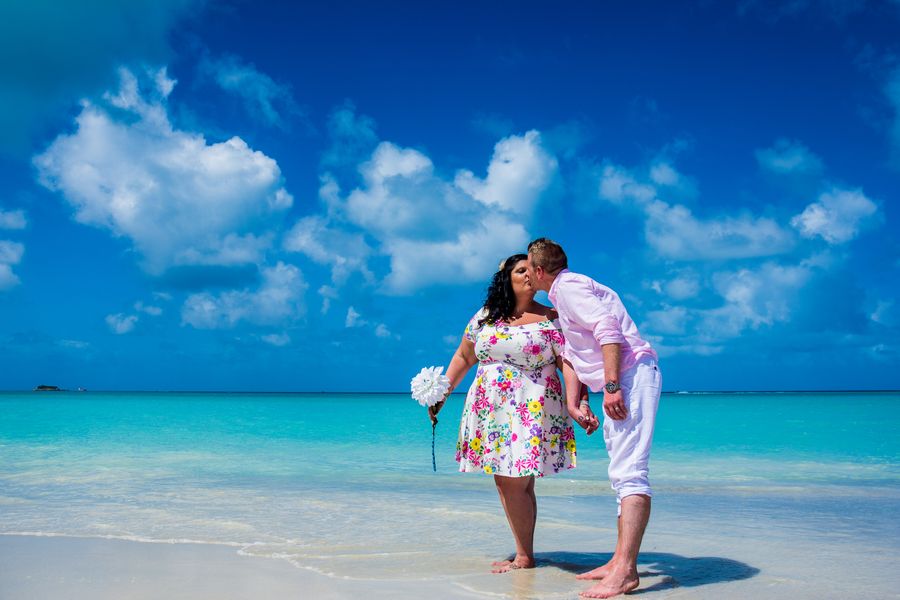
Antigua and Barbuda are two main islands in the Caribbean Sea with a total area of 443 sq km. Antigua is known for a warm maritime climate with almost no seasonal variation in temperature, the beaches of the north-west coast and the bays where sailing regattas are held. Barbuda, the smaller island, is a low limestone and coral island.
- Climate: tropical maritime, with almost no seasonal variation in temperature
- Coastline: 153 km
- Languages: English (official), Antiguan Creole
- Currency: East Caribbean dollar (XCD)
History, culture and what to see
Antigua and Barbuda are two main islands in the Caribbean Sea with a total area of 443 sq km. Antigua is known for a warm maritime climate with almost no seasonal variation in temperature, the beaches of the north-west coast and the bays where sailing regattas are held. English Harbour is a centre of yachting, and Nelson's Dockyard, a former naval base, was inscribed on the UNESCO list in 2016: restored buildings of the 18th and 19th centuries are preserved here. Barbuda, the smaller island, is a low limestone and coral island. The official language is English; Antiguan Creole is common in everyday speech.
What to see and how far it is from our places
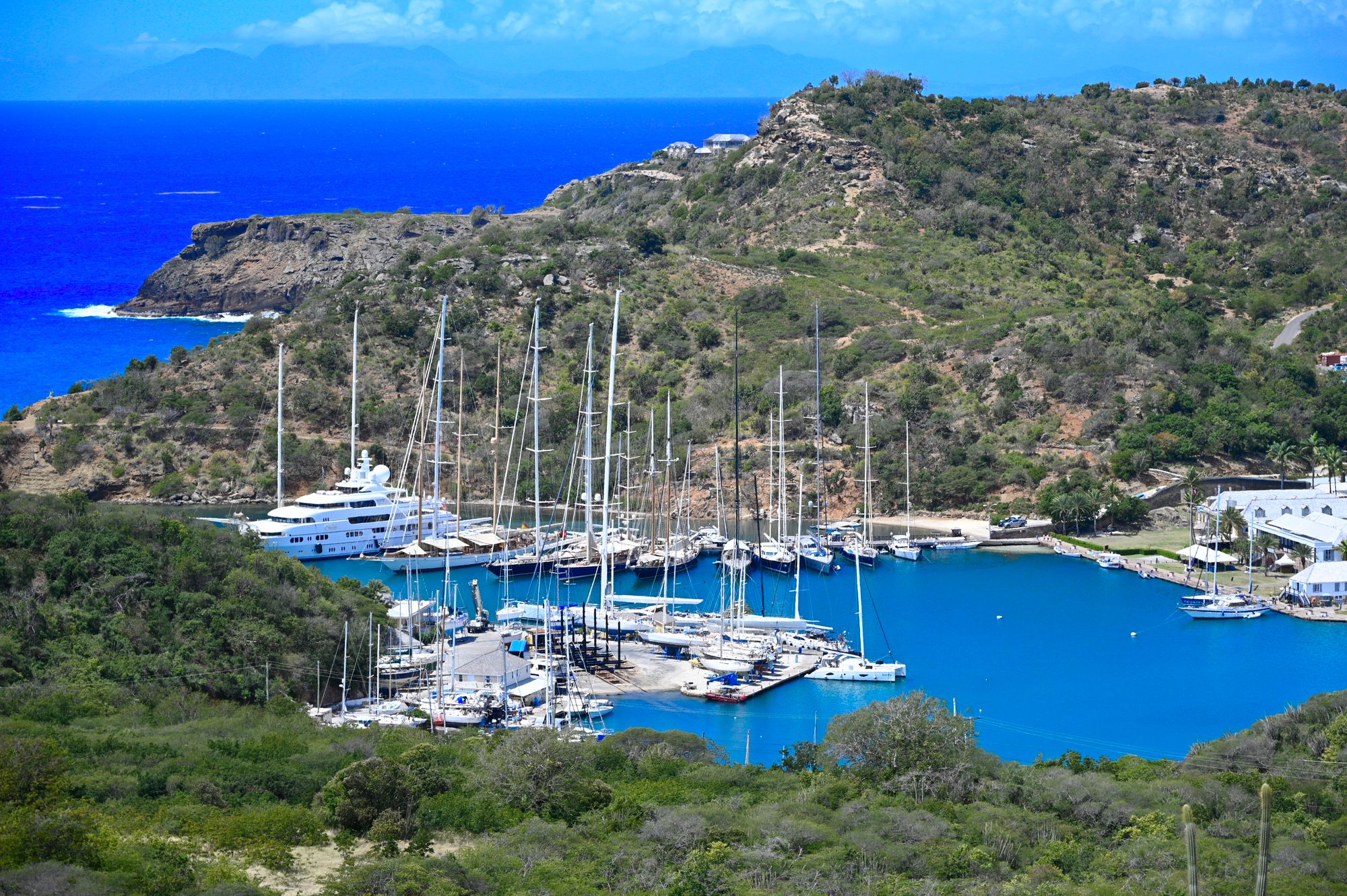
- Nelson's Dockyard (UNESCO). A naval dockyard of the British fleet in English Harbour: an ensemble of Georgian-era buildings behind a defensive wall. The deep, narrow bays among the hills sheltered ships from hurricanes and suited repairs. A UNESCO World Heritage site since 2016; today it is a working yacht harbour. English Harbour — 1 km, Jolly Harbour — 15 km, Dickenson Bay — 19 km.
- Shirley Heights (UNESCO). A defensive complex on Dow Hill above English Harbour. It was built in the 1780s to protect the naval dockyard. Today it is part of the Nelson's Dockyard National Park and of the UNESCO World Heritage site. English Harbour — 2 km, Jolly Harbour — 16 km, Dickenson Bay — 20 km.
- Jolly Harbour. A residential area on the west coast of Antigua around a harbour. On the peninsulas and on a residential island in the middle of the harbour are villas and resort complexes. Jolly Harbour — within the town, Dickenson Bay — 11 km, English Harbour — 15 km.
- Dickenson Bay. A bay on the north-west coast of Antigua with white beaches and calm sea. One of the largest concentrations of hotel rooms and restaurants in the country is found here. Dickenson Bay — within the town, Jolly Harbour — 11 km, English Harbour — 20 km.
- English Harbour. A village in the south of Antigua and a centre of yachting, with two sheltered deep-water harbours. Here is Nelson's Dockyard, a former British naval base with restored buildings of the 18th and 19th centuries. English Harbour — within the town, Jolly Harbour — 15 km, Dickenson Bay — 20 km.
- Fort James. A fort at the entrance to St John's harbour, built in 1706-1739 to guard the harbour. The powder magazine, several cannon and the foundation of the wall have survived. The main value of the place today is the view of the harbour. Dickenson Bay — 4 km, Jolly Harbour — 8 km, English Harbour — 18 km.
- Rendezvous Bay. An officially recognised historic site and a former sugar plantation on the border of the parishes of Saint Paul and Saint Mary. The bay is considered one of the best-known beaches of the island and attracts lovers of walking trails. English Harbour — 5 km, Jolly Harbour — 10 km, Dickenson Bay — 16 km.
- St John's. The capital of Antigua and Barbuda, on the island of Antigua. Dickenson Bay — 5 km, Jolly Harbour — 7 km, English Harbour — 16 km.
- Fig Tree Drive. A scenic road about five miles long, running through a mountain forest area in the parish of Saint Mary. It is almost fully covered by the tree canopy and is known for views of the rainforests of the Shekerley range. Jolly Harbour — 7 km, English Harbour — 8 km, Dickenson Bay — 14 km.
- Betty's Hope. A former sugar plantation on Antigua with a surviving sugar mill. It is a place where one can see how sugar production was arranged in colonial times. English Harbour — 9 km, Dickenson Bay — 14 km, Jolly Harbour — 15 km.
Now to business
Strengths first, then the essentials of the market. As of 11 October 2026.
What is good about this place
- Inheritance without tax. According to a consulting firm's page, there is no inheritance tax and no tax on the property of an owner who has passed away in the country; court fees for the paperwork remain.
- Citizenship for the whole family. The programme covers the spouse and dependent children up to 30.
- International school. Island Academy states that it is the only IB (International Baccalaureate) school on Antigua, since 2011; it also prepares for Caribbean regional examinations. Fees for the 2026/27 school year are from 15,000 to 30,000 local dollars a year (about $5,600-11,000), depending on the grade.
- A calm setting. According to police data for the first ten months of 2025, the number of registered incidents fell by 10.3% compared with the previous year.
The market in brief
- A foreigner can own property in their own name, in full ownership. Before the transaction a land holding licence for non-citizens is needed; it is issued for a specific property.
- The annual property tax is modest, and there is no general capital gains tax. On a sale a foreigner pays a separate tax on the gain in the value of land: 5% of the difference in prices.
- There is a citizenship-by-investment programme: from $230k as a contribution to the National Development Fund, or from $300k in property in approved projects, held for five years.
- Purchase costs depend noticeably on the source: the land licence under the 2020 law costs 7% of the market price, and many agency sites still write 5%.
- The rental tax rate for a non-resident differs between sources: the tax authority's page gives 12.5%, the 2016 law prescribes a 25% withholding.
- A mortgage for a non-resident is possible at local banks, but with a larger deposit and proof of assets; the market is mostly cash.
Worth keeping in mind
- The country's currency is firmly pegged to the US dollar (2.70 local dollars to 1 dollar), so there is almost no currency risk between them.
Details
Open what matters to you. The sections come from the knowledge base and grow with it.
What and where a foreigner can buy
- Full ownership in your own name. A foreigner can own land and buildings; the share of foreign investment can reach 100%. There is one condition: a land holding licence, which must be obtained before the transaction.
- Who issues the licence. One page names the Ministry of Justice, a summary of the 1968 law names the Governor-General. Which procedure applies in practice, we will confirm on request.
- Companies and trusts. Licences are obtained by both individuals and companies. For companies managed by non-citizens, and for trusts, the law has separate restrictions.
- Without a licence only a lease for up to five years is permitted.
- Barbuda. According to our records, a foreigner cannot acquire land on Barbuda, and cannot build there either. The island of Antigua is open on licence terms.
- Renovation and rebuilding also go through a licence: the time to obtain it is given as three to six months.
What it costs to buy, hold and sell
Buying (paid by the buyer; rates are on the market price):
| Item | Amount |
|---|---|
| Stamp duty on the land licence, freehold | 7% of market value (2020 law); a lease of 10-50 years — 5% |
| Stamp duty on the transfer | 2.5% (according to the pages of agencies and law firms) |
| Lawyers | 1-2% |
| Fee for filing the licence application | 100 local dollars (about 37 dollars) |
An example for a property worth $100,000, at the rates of the 2020 law: licence 7,000, stamp duty 2,500, lawyers 1,000-2,000. Total $10,500-11,500, that is 10.5-11.5% of the price, plus the application fee. If the licence is taken at 5%, as agencies write, it comes to 8.5-9.5%. There are two figures here, and we give both: the 2020 law is the official source, the agencies' pages may have fallen behind it.
Holding:
- The annual tax on a residential building is 0.30% of the assessed value, on the land under a home 0.20%. These are the rates of the 2007 order; we have not found a newer order on rates. A law firm's page gives a range of 0.1-0.5% depending on the type of property. The current rates can be checked with the tax authority; we will provide them on request.
Selling:
- The tax on the gain in the value of land for a non-citizen seller is 5% of the difference between the sale price and the purchase cost with capital expenditure (Non-Citizens Land Holding Regulation Act, section 19). There is no general capital gains tax in the country.
- The seller's stamp duty on the sale of land and buildings is, by law, an additional 5%. A law firm's page writes 7.5% for the seller: this is the total of the fees of both parties, and added to the buyer's share it is counted twice. The agent's commission is not included.
Renting
- Yield. Agencies give a gross yield of 5-8% for beachfront properties; these are sellers' pages, not statistics. Weekly rates in high season for four-bedroom villas are $6,000-15,000.
- Rental tax for a non-resident. The tax authority, on its page of answers to questions, names 12.5% on every dollar of rental income. The 2016 Unincorporated Business Tax law requires the payer of rent to withhold 25% and remit it by the 15th of the following month. The amount withheld is credited against the final tax. Which figure applies in practice, we will check with the tax authority on request.
- Manager. A non-resident is required to hire a property management agent.
- The rules for long-term and short-term rental we will provide on a separate request.
This is the tax in Antigua and Barbuda. Tax in the country where the investor lives is calculated separately.
Mortgage
- Mortgages for non-residents are possible at local banks. Banks usually ask for proof of substantial assets and a larger first deposit than for locals; sometimes also property abroad as security. ECAB and CIBC FirstCaribbean are named.
- A loan to a non-resident is subject to stamp duty of 3% of the loan amount. By law it is paid by the bank; whether it is passed on to the borrower, we will confirm on request.
Residence and citizenship
- Citizenship by investment. Two routes: a contribution from $230k to the National Development Fund, or property from $300k in projects approved by the government. The property cannot be sold within five years, except to buy another approved property. Processing times are six to nine months (according to a consultant's page).
- Family. The application includes the spouse and dependent children aged 0-30, and from 18, children with disabilities living with the applicant (the programme's official page).
- Residence by property as a separate status we will provide on request.
Who it is open to (by the applicant's first citizenship). What the programme itself says about applicants with different passports; "not named" does not mean "open".
- Citizenship by investment (citizenship; accepts applications): Russia, Belarus — not accepted; Kazakhstan, Uzbekistan, India, Pakistan — not in the published list of excluded countries.
Under the law of their own country, the first citizenship is lost in that case: Kazakhstan, Uzbekistan, India, Pakistan.
Prices: four rows
We do not yet have a housing price index for the country: the Bank for International Settlements does not publish one. So the series in four forms are not available. The country's currency is pegged to the US dollar at 2.70 local dollars to 1 dollar (Eastern Caribbean Central Bank data), so prices in dollars and in local currency differ only by a fixed multiplier.
What this means:
- For a buyer with dollars there is no currency risk between the dollar and the local currency while the peg holds.
- The price trend can be roughly judged from the agencies' words: growth of 8-12% a year on the coast, about 9% over the last year in Jolly Harbour (the Chestertons agency page). These are the seller's words, not statistics. The inflation-adjusted series we will provide on request.
Commercial property
What a foreigner can buy. The terms are the same as for homes: a land licence. Without it only a lease of up to five years is permitted. A separate company does not have to be created, though there are restrictions for companies managed by non-citizens and for trusts. This is from a summary of the law; we have not opened the text itself.
How it differs from homes.
- The licence (about 5% according to agencies, 7% under the 2020 law), the buyer's 2.5% stamp duty and lawyers at 1-2% are given without distinction by type of property; we did not find separate rates for commercial transactions.
- The annual tax on non-residential properties: building 0.50%, land 0.40% of the assessed value. These are the 2007 rates according to a consulting firm's page; the current ones can be checked with the tax authority.
- Value added tax on rent and the amount of tax on income from commercial rent we will provide on request.
Mortgage. For non-residents it is usually not offered for commercial property; the market is mostly cash. Some local banks consider applications with a large deposit.
Citizenship. The list of approved projects includes hotels, resorts and villas; there are no separate shops and offices.
Yield, vacancy shares and prices for small commercial properties we will provide on request.
Who builds: developers, projects and prices
A summary from the developers' own websites. This is a sample, not a census of the market: it includes companies that have a working website; prices are the published "from" prices, stages are as worded on the pages.
- Developers in the base: 6, of which with project pages on their own site — 6.
- Projects: 10; completed 0, under construction 1, in pre-sale 1; for 8 the stage is not named on the page.
- "From" prices are published for 4 projects of 10: from $300k to $2m, median $1.45m (projects with a price: 4).
- Foreign buyers are addressed directly by 3 of 6; for 3 the site says nothing about it. Site languages: English — 6.
By place:
- Jolly Harbour: projects 3, developers 2; stage not named on the pages; prices from $300k to $1.6m, median $1.3m (projects with a price: 3).
What the developers' sites do not show: the pace of sales, the share sold and delays in delivery. Promises of rental income and buy-back are the seller's statements; they have not been verified.
Who sells and where to look
The directory has two developers: Elmsbridge Property (Antigua) Ltd and Orange Limited (Pearns Point). Listings: Luxury Locations Real Estate, Paradise Properties Connection.
What else we will do for you
The review answers the general questions. Then your own story begins — and we are with you at every step.
We work out your exact tax
For your passport and the country you live in: on purchase, ownership, letting and sale.
We gather real prices
For the district and the building you like: what actually sells and for how much.
We show you properties
Options for your goal and budget, and a viewing on site or by video.
We check the developer and the papers
Title, permits, the record of completed buildings — before you pay anything.
We handle the paperwork
The deal, registration of title, residence for the family, a bank account.
We stay with you after the purchase
Letting, management, reporting — and the sale when the time comes.
For this country we will find out for you
Where to begin?
Tell us what matters to you, and we will start from your task, not from a catalogue.